
You’re not “bad at interviews” — you’re bad at evidence.
INTERVIEW MASTERYPERSONAL BRAND
3/4/20262 min read
Here is the uncomfortable truth: Most interviews don’t reject your personality. They reject your lack of proof.
When someone says, “I’m just not good at interviews,” what they usually mean is:
“I freeze and go blank.”
“I ramble because I don’t know what to highlight.”
“I sound less senior than I am.”
“I know I’m good… but I can’t show it.”
That creates a specific kind of pain:
embarrassment (you leave thinking “why did I say that?”)
self-doubt (you question your competence)
rejection fatigue (each no feels like a personal verdict)
helplessness (“maybe I’m just not charismatic”)
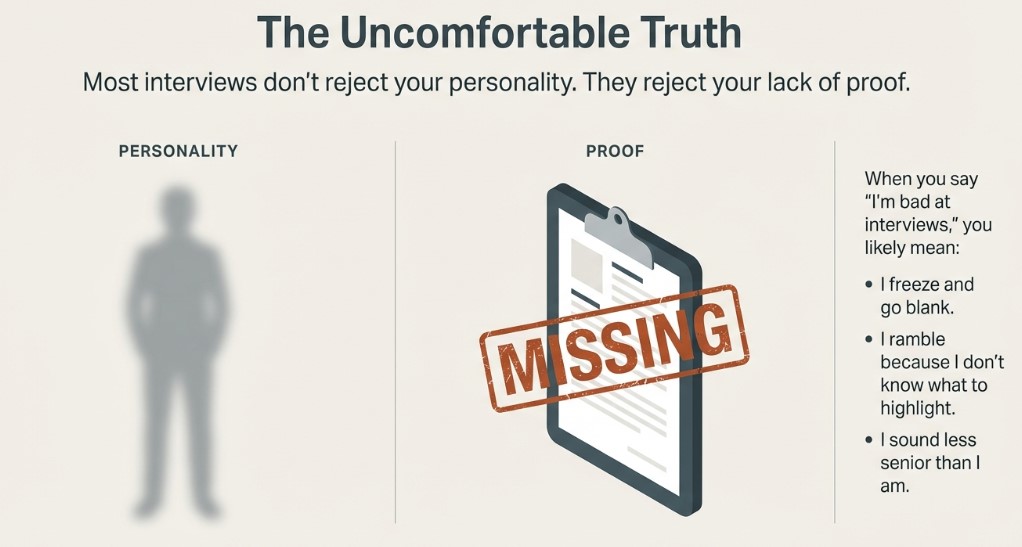
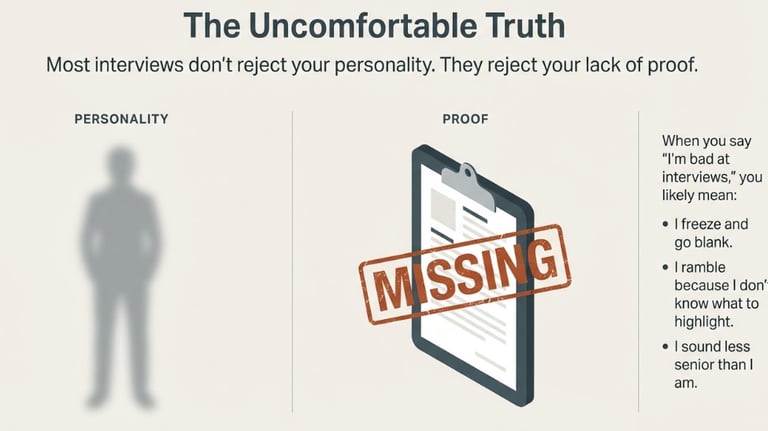
Here’s the compassionate reframe: You’re not broken. You’re under-prepared for a structured test.
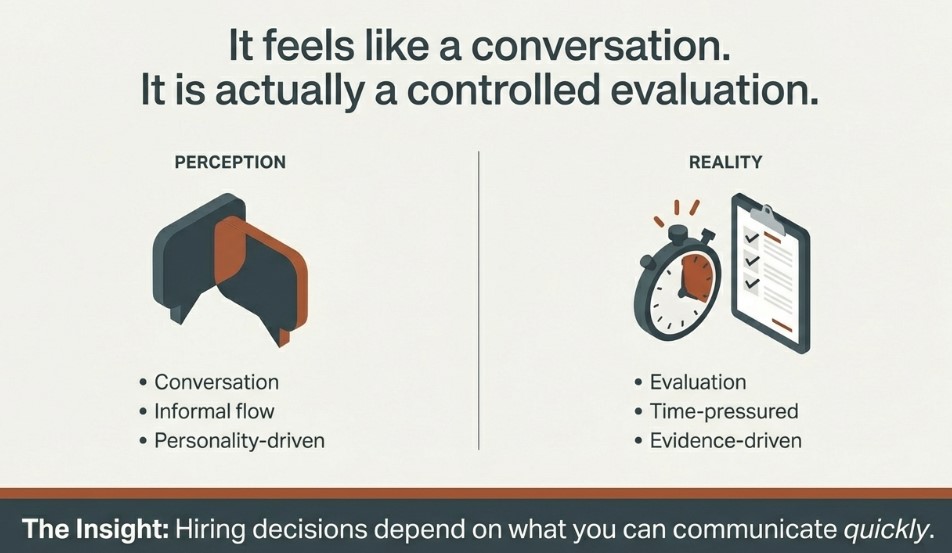
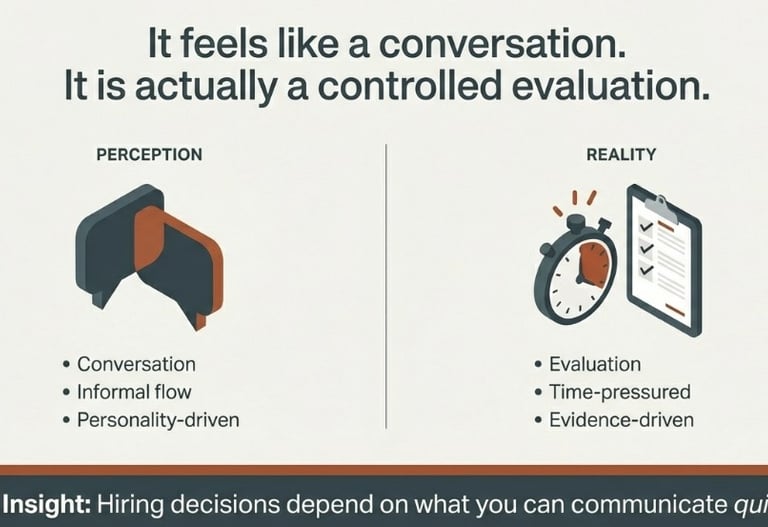
Interviews feel like conversations, but they’re not. They are controlled evaluations under time pressure, designed to reduce hiring risk. And the system incentivizes one thing above all: Evidence.
Here is why most people struggle:
They confuse “experience” with “evidence”
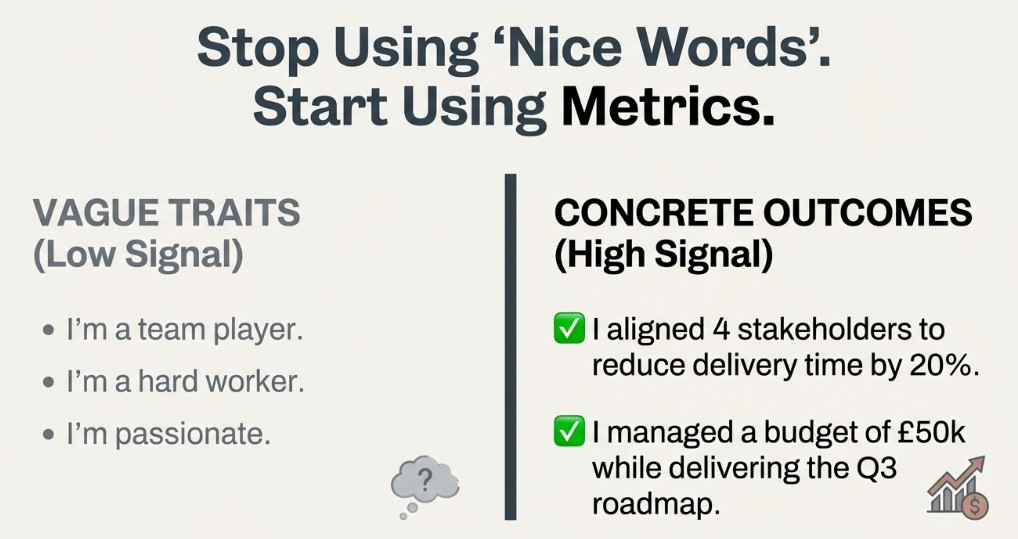
Doing the work isn’t the same as explaining the work. Hiring decisions depend on what you can communicate quickly.They rely on vague traits instead of concrete outcomes
“Team player.” “Hard worker.” “Passionate.”
Nice words—low signal. Anyone can say them.They haven’t built reusable stories
So every interview becomes improvisation. Improvisation under pressure = freezing, rambling, or underselling.They don’t anticipate objections
Career change, gaps, job hopping, stepping down/up, relocation, salary expectations—these aren’t surprises. They’re predictable.
So no, you’re not “bad at interviews.” You’re missing the assets that make interviews easy.
What to do instead? Here is a snippet from the Stage 2 of the 5×5 Framework. Stage 2 exists to make you shortlist-ready (ATS + human) and interview-ready because your proof is organised. Here are the most relevant Stage 2 steps for fixing interview performance:
1.Have an Evidence pack (proof that travels with you)
You need a simple “proof pack” you can pull from:
achievement one-pager (top wins + metrics + scope)
1–2 mini case studies (problem → action → result)
portfolio (if applicable) or “work samples” framing for non-creative roles
This is how you stop relying on memory in the moment.
2.Create a Story bank draft (6–10 STAR/CAAR stories mapped to competencies)
This is the cheat code. Build 6–10 core stories that cover common competencies:
stakeholder management
conflict
ambiguity
leadership
delivery under pressure
influencing
learning fast / ramping up
failure + recovery
When you have a story bank, interviews stop being “think on the spot”, and they become “choose the right story.”
3.Have an Objection handling prep (the stuff you keep hoping they won’t ask)
Write answers for:
career change (“why now, why this, why you’ll succeed”)
employment gaps (“what happened, what you learned, what you’re doing now”)
job hopping (“pattern, what you were optimizing for”)
relocation/remote needs
salary expectations (anchored to scope + market, not emotion)
Objections don’t disappear when you avoid them. They just show up unprepared. And remember: Stop trying to sound confident. Start trying to sound evidential.
If you want help building an evidence pack, creating a story bank that matches your target roles, and training your answers so interviews stop feeling like a performance, book a free 30-minute discovery call with Career Bridge Studio.
Contact us:
© 2026. All rights reserved.
Visual Bridge LTD T/A Career Bridge Studio
Online career coaching for professionals across the UK. Based in Milton Keynes.
CareerBridgeStudio
Apply better. Interview stronger.